
Terraces, Lakes, and Festival Season: What a Dutch Summer Actually Looks Like
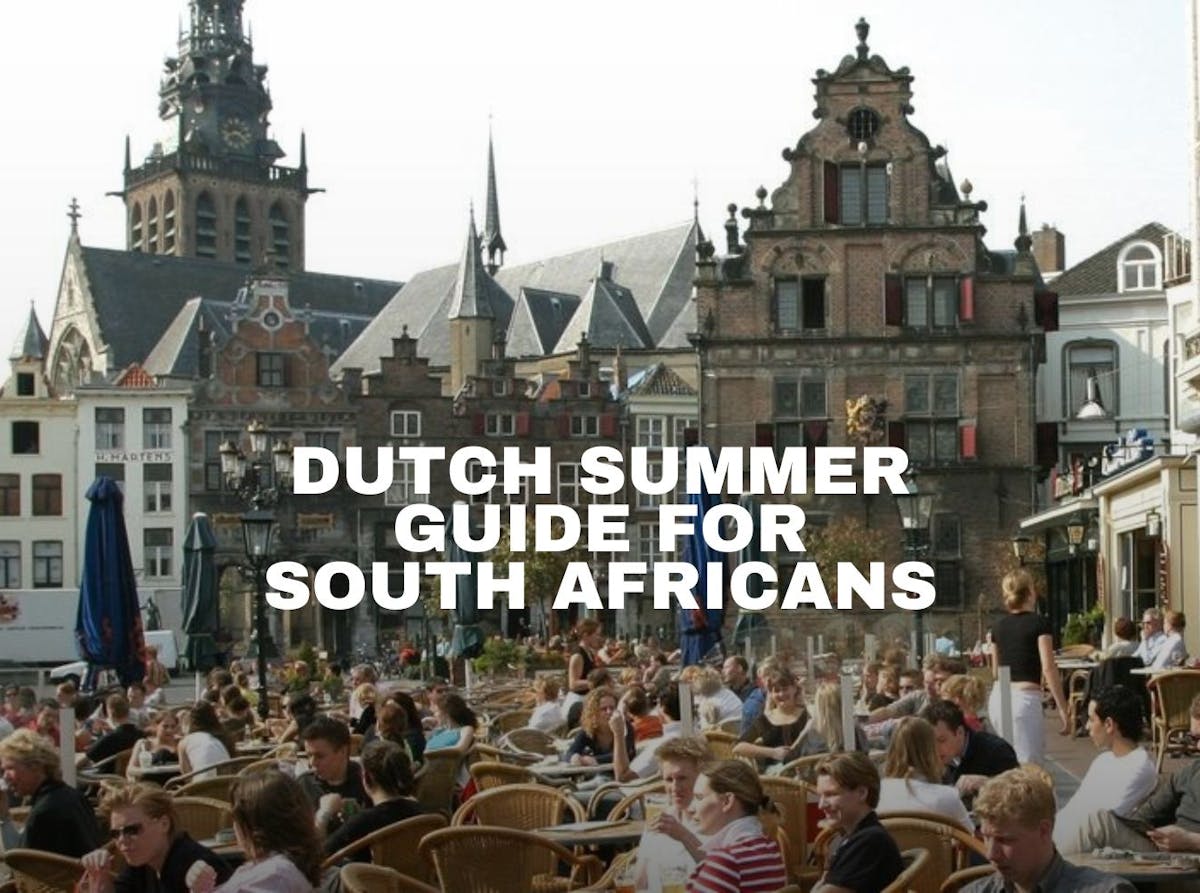
A Dutch summer is nothing like the grey, flat, drizzling country most South Africans picture. Land here between June and August and you get sun until 10pm, every terrace spilling onto the pavement, and a national mood that shifts almost overnight.
If you're weighing the move and only picturing rain jackets and bicycles in the sleet, this is the season nobody warns you about. Here's what it actually looks like.
Why does the terrace matter so much in Dutch summer?
The moment the temperature clears about 18°C, Dutch cities transform. Chairs and tables spill out of cafes onto bridges, pavements, and floating pontoons, and the terras (terrace) becomes the default place to be after work or on a weekend afternoon. It's not a special outing, it's just where people are. Even at home, you'll see neighbours pull chairs onto the pavement to catch a bit of sun with a coffee or a beer.
Pair that with BBQ'en (a proper Dutch summer institution) in every park, back garden, and canal-side spot the moment the sun holds for more than a day, and an avondwandeling (evening walk) after dinner while the light lasts. That's how much of Dutch social life genuinely happens outdoors for these few months.
One small language note: if a Dutch colleague talks about a "BBQ" this weekend, that's what you'd call a braai. The Dutch use the English word for it, we don't, but the smell of something on the coals hits exactly the same whichever word you use.
Takeaway: for a few months a year, Dutch social life moves almost entirely outdoors, and the terrace, not the living room, is where it happens.
Where do the Dutch actually go swimming?
This part tends to surprise South Africans the most. Cities set up official swimming spots at lakes and canal-adjacent areas, complete with lifeguards and changing rooms, and on a hot day you'll find locals of every age jumping straight in.
If you want an actual beach, the North Sea coast (Zandvoort, Scheveningen, and the quieter stretches of Zeeland) is reachable from most of the country by a single train ride.
What's worth knowing about the Netherlands' national parks?
Away from the water, the national parks are worth knowing about too. Hoge Veluwe combines forest and heathland with a genuinely excellent art museum inside the park itself, and Zuid-Kennemerland, just outside Amsterdam, has dunes, beach, and free-roaming bison. It's not the Drakensberg, but it's a real escape, and it's often less than an hour from wherever you're living.
Are there really wolves in the Netherlands now?
Yes. Wolves returned to the Netherlands in 2015 after roughly 150 years of absence, and the population has grown steadily since. As of the most recent 2026 count, there are an estimated 14 wolf packs in the country, mostly settled across the Veluwe, Drenthe, the Gelderse Vallei, and the Utrechtse Heuvelrug.
The actual risk to walkers and cyclists is low. Wolves generally avoid people, and this isn't a reason to skip the trails. It's just a good idea to stick to marked paths, keep dogs on a lead in these areas, and not feed anything you see, the same common sense you'd already apply back home.
Takeaway: it's a genuinely new thing to know before you go, but it changes nothing about whether hiking here is safe.
How big of a deal is festival season?
South Africans tend to associate "festival culture" with a handful of big annual events. In the Netherlands, summer is basically one long festival season, with something happening most weekends from April through September somewhere in the country.
Music festivals like Pinkpop, Lowlands, and Best Kept Secret draw international lineups, while smaller local ones bring food trucks, open-air cinema, and neighbourhood picnics into every town's calendar. People arrive by bike, sit casually on the grass, and stay out long after dark because, in June and July, it barely gets dark at all.
Is Dutch summer really worth the hype?
Summer here is genuinely short, and Dutch people treat it that way, with real urgency. You'll notice locals dropping everything the moment the forecast turns good, because everyone knows the grey stretch is coming back. If you move expecting year-round sunshine, you'll be disappointed. If you move understanding that these few months get used properly, you'll get it.
It's also worth saying plainly: none of this replaces the community you're leaving behind. A terrace full of strangers isn't a braai with your closest friends. But it is, genuinely, one of the better versions of "life outside the office" you'll find anywhere in Europe, and it's part of why so many Globetrotters tell us the adjustment was worth it once the sun came out.
FAQ
Is the Netherlands really as rainy as people say? Most of the year, yes, and that reputation is fair. But June through August is a genuinely different country: long daylight hours, warm terrace weather, and a national shift in mood the moment the sun holds.
Do I need a car to get to the beach or national parks? No. The North Sea coast and parks like Hoge Veluwe and Zuid-Kennemerland are reachable by train or a short regional bus from most major cities, which is part of why Dutch summer weekends revolve so heavily around them.
Should I actually be worried about wolves while hiking? No. The risk to people is very low and wolves generally avoid human contact. Basic precautions, staying on marked paths, keeping dogs leashed, and not feeding wildlife, are enough.
What's the best way to experience festival season as a newcomer? Start local. Smaller neighbourhood festivals and open-air events are low-pressure, often free, and a genuinely easy way to spend a weekend outdoors before working up to the bigger names like Pinkpop or Lowlands.
Curious what your own summer here could look like?
If you want to see current vacancies, start here: thenextglobetrotter.co.za/jobs
Engineer Your Dutch Life. Even the weather has its moments.
Image source: https://www.soetkees.nl/nieuws/de-leukste-terrasjes